EXPLANATORY NOTE ON THE USE OF FILTERS IN OUR EXTRACTOR HOODS – ALL OUR HOODS OPERATE IN 2 VERSIONS
-
External discharge
In this case, a 125 mm diameter nozzle is fitted at the rear of the appliances to attach a pipe which is connected to the exterior of the building or the room where the pollutants are emitted, so they can be channelled out and evacuated.
For safety reasons, we would recommend using a dust filter (ref : FPP1) in the appliance to :
– Protect the turbine from the risk of getting fouled or blocked by the fall or suction by the turbine of an object which could block it or damage the blades
– Protect the operator at his station against the risk of any kind of accident, as the turbine rotation is open to the air (e.g. suction of any hair, projection of objects fallen into or sucked up by the turbine…)
-
Discharge into the work premises after filtration
If the filtration option is chosen, it is essential to know what pollutants will be picked up in order to decide which filter to use.
This choice depends on :
– The nature of the pollutant (vapour, dust…)
– The concentration emitted
– Its Power to be adsorbed by the filter
– The replacement rate of filters over time
DIFFERENT TYPES OF FILTERS – USE
-
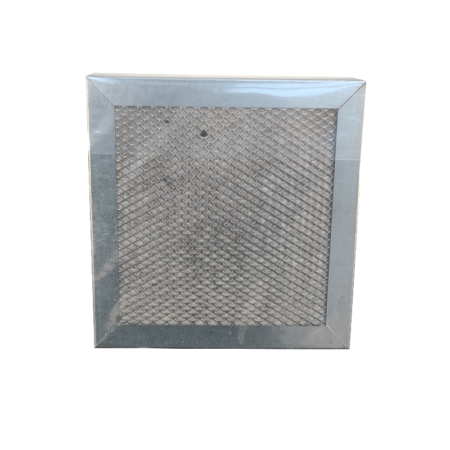
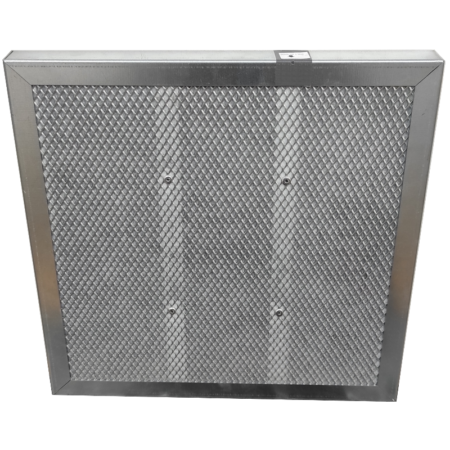
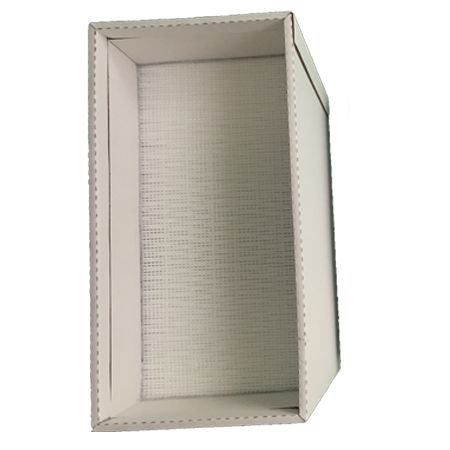
Active charcoal filter
– Ref : FCP1 : For all hoods except HI8
– Ref : FC2 : For HI8 hoods
The active charcoal filter is used to eliminate noxious or unpleasant smells emanating from liquids, vapours or smoke.
To find out the efficiency of the filter in relation to the pollutant to be processed, we have drawn up a list of the main products with which we are most often confronted (see attached table).
The a – b – c – d classification of adsorption rates is empirical, but generally the products classified c and d are perfectly well filtered by active charcoal.
Please consult us about any products that do not appear on this list. -
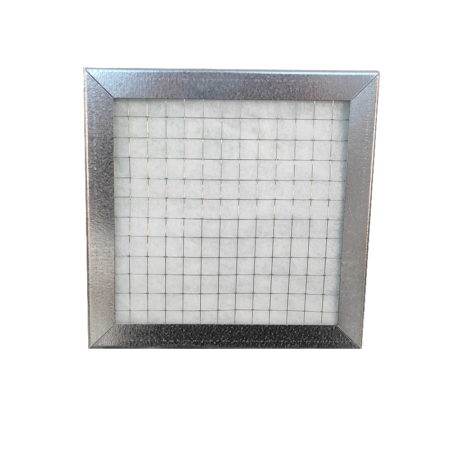
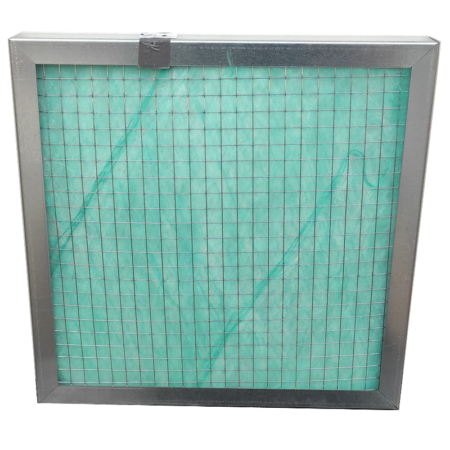
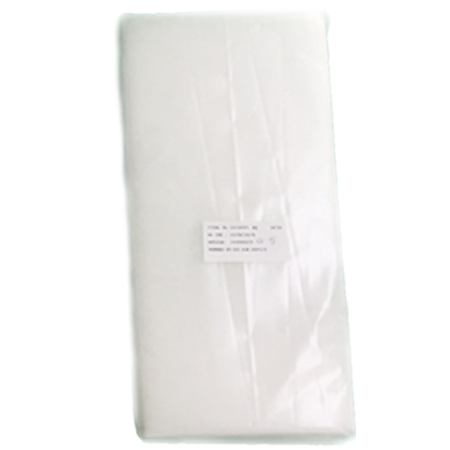
Dust filter
– Ref : FPP1
These have 2 uses :
– In the case of external discharge (see external discharge section), protective
– As their name indicates, to pick up particles suspended in the air, emanating from either grinding or scraping, or from powder handling…
This filter stops down to 1 µ granulometry with excellent percentage results -
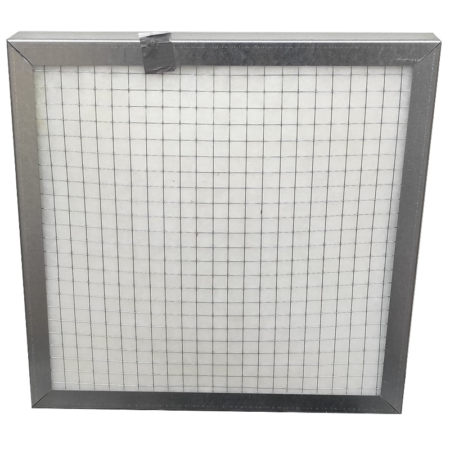
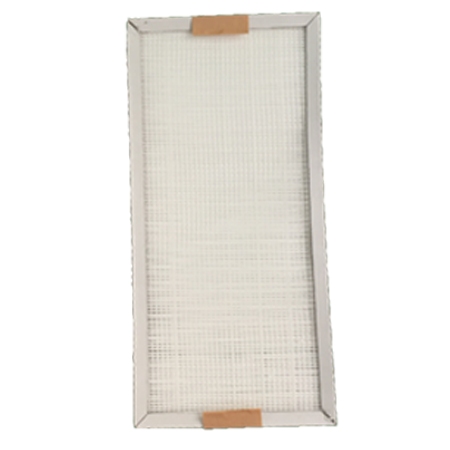
Aerosol filter
– Ref : FAP1 : For all Hoods except HI8
– Ref : FA2 : For HI8 Hoods
To use in the same circumstances as the FP/P1 filters, but these pick up particles with a granulometry far below (smoke collection, for instance). -
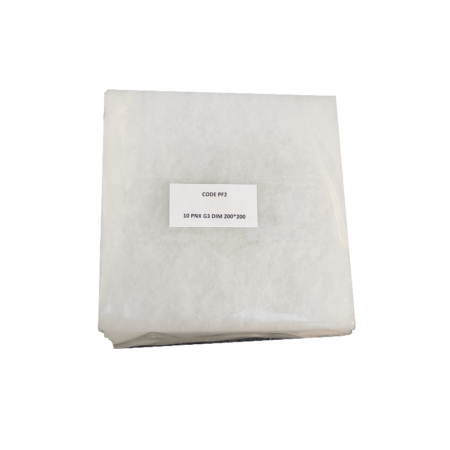
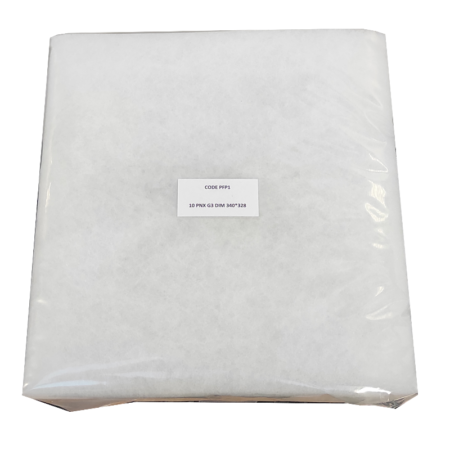
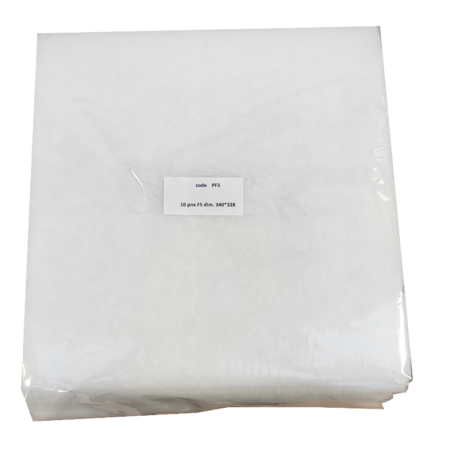
Pre-filters
– Ref : PFP1 : For all Hoods except HI 8
– Ref : PF2 : For HI 8 Hoods
The aim of this filter is to protect the active charcoal filter against particles, so as to prevent the surface of the filter becoming clogged.
FAQ – Air Filters for Fume Hoods
How do I choose the right filter for my fume hood?
The choice of filter depends on several factors:
- The nature of the pollutants (vapours, dust, smoke, odours…)
- Whether the hood exhausts outside or recirculates internally
- The concentration and frequency of emissions
FTM Technologies provides a filter selection chart listing the most common products and their recommended filter types.
What are the two main operation modes?
- External exhaust – the air is ducted outside the building via a 125 mm rear collar.
In this case, we recommend fitting a dust filter (FPP1) to protect the fan and the operator from accidental projections. - Internal recirculation – the air is filtered before being released back into the workspace.
The right filter must be chosen according to the nature of the pollutant.
What are the different types of filters?
FTM Technologies offers several filter categories to adapt to different pollutants:
- Activated carbon filters – for vapours, solvents, VOCs and odours (FCP1, FC2).
Available with specific impregnation (KOH, H₂SO₄, etc.) depending on the contaminant. - Pre-filters – thin filters (G3 classification) to prevent clogging of the main filter (PFP1, PF2).
- Coarse dust filters – for particles up to 10 μm, e.g. grinding or powder handling (FPP1, FA2 – G4 classification).
- High efficiency filters – capture submicron particles and smoke (FAP1, FA2).
- Absolute HEPA filters (H14) – retain 99.995% of 0.1 μm particles such as fine dust, aerosols, and viruses.
When should I use an activated carbon filter?
Activated carbon filters are used for the adsorption of vapours and gaseous pollutants emitted by solvents, adhesives, inks, resins or cleaning agents.
They eliminate unpleasant or toxic odours by physically trapping volatile organic compounds (VOCs).
For certain substances (acids, ammonia, formaldehyde), FTM can provide impregnated carbon filters or specific blends tailored to the chemical family.
What is the role of the pre-filter?
The pre-filter is placed in front of the main filter to capture larger dust particles and extend the life of the main filtration stage.
It is inexpensive and easy to replace, making it a key element in maintaining system efficiency.
What does “HEPA H14” mean?
HEPA stands for High Efficiency Particulate Air.
The H14 class retains 99.995% of particles of 0.1 μm.
It is used for applications requiring maximum particle protection – such as electronics, healthcare, or fine dust filtration.
How often should I change the filters?
The frequency of filter replacement depends on use and the nature of pollutants.
As a general rule:
- Pre-filters → every 3 to 6 months
- Activated carbon or HEPA filters → every 12 months or when airflow decreases
For specific applications, FTM can recommend replacement intervals adapted to your process.
Can FTM filters be used in other brands of hoods?
Yes. FTM filters can often be adapted or custom-made to fit hoods from other manufacturers, as long as the technical specifications are provided (dimensions, flow rate, pollutant type).
How can I verify filter efficiency?
Each filter is supplied with a specification sheet and reference code.
Efficiency is guaranteed by FTM Technologies according to EN 1822 (for HEPA) and ISO 16890 (for particulate filters).
Carbon filter performance depends on the chemical family and saturation capacity, verified by test protocols.
- Display 36 Products per page