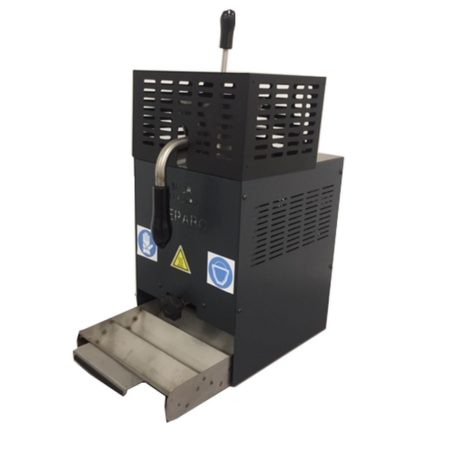
Slag separator for miniwave
FTM Technologies presents its SEPARO machine, the expert in slag separator.
The “SEPARO” slag separator has been developed to recover slags, which inevitably occur during the use of wave soldering machines, with alloys (leaded and lead-free).
The greater amount of alloy that would normally be destined to the processing centers, weighing in the purchase costs, is handled by SEPARO.
FAQ – Solder Dross Separator (SEPARO)
What is a solder dross separator used for?
A solder dross separator is used to separate oxides (dross) created in solder baths from reusable alloy.
The clean alloy is recovered as ingots, while dross is set aside for disposal or recycling.
The clean alloy is recovered as ingots, while dross is set aside for disposal or recycling.
How does the separator work?
The process relies on the difference in density between alloy and oxides:
- the dross is placed in the melting chamber;
- molten alloy, being heavier, passes through a metal filter;
- light oxides remain trapped in the filter;
- clean alloy flows out through the drain valve.
No chemicals are used; the process is mechanical and does not alter the alloy.
Which solder alloys can be processed?
Suitable for most leaded and lead-free alloys, including:
- SnPb
- SnCu, SnAgCu, SAC
- alloys used in wave soldering, mini-waves and tinning baths
What is the capacity and the main specifications?
Typical specifications:
- Power supply: 230 V
- Power: 2 kW
- Capacity: up to approx. 25 kg
- Weight: ~13 kg
- Dimensions: approx. 460 × 630 × 260 mm
- Working temperature: 350°C (max. 400°C)
What does a typical cycle look like?
- Load the dross (cold or hot);
- Heat up to the working temperature;
- Stir to break clusters;
- Drain the clean alloy;
- Cool down and remove remaining dross.
Is hot or cold dross better?
Both can be processed, but hot dross improves separation efficiency and shortens the cycle.
What safety precautions are required?
- use in a ventilated area;
- wear PPE (gloves, goggles, protective clothing);
- avoid contact with hot surfaces and molten alloy;
- prevent untrained personnel from using the device;
- never perform maintenance while hot or powered.
What are the economic and environmental benefits?
- high alloy recovery from dross;
- reduced purchase of new solder;
- lower external waste volumes;
- supports a reduced-waste strategy.
How is the temperature adjusted?
- open the setpoint menu;
- adjust temperature;
- confirm the value.
Typical setpoint: 350°C (max. 400°C).
What maintenance is required?
- clean filter and chamber regularly (cold);
- check the central passage and drain valve;
- remove any blockages if needed;
- inspect wiring and connectors.
♻️ Typical application: recovering solder alloy from wave-soldering and mini-wave dross.
- Display 36 Products per page